Comprehensive Guide to Saudi Civil Defense Requirements for Fire Pump Room Design and Implementation
Introduction: Importance of Fire Pump Rooms and Safety Standards
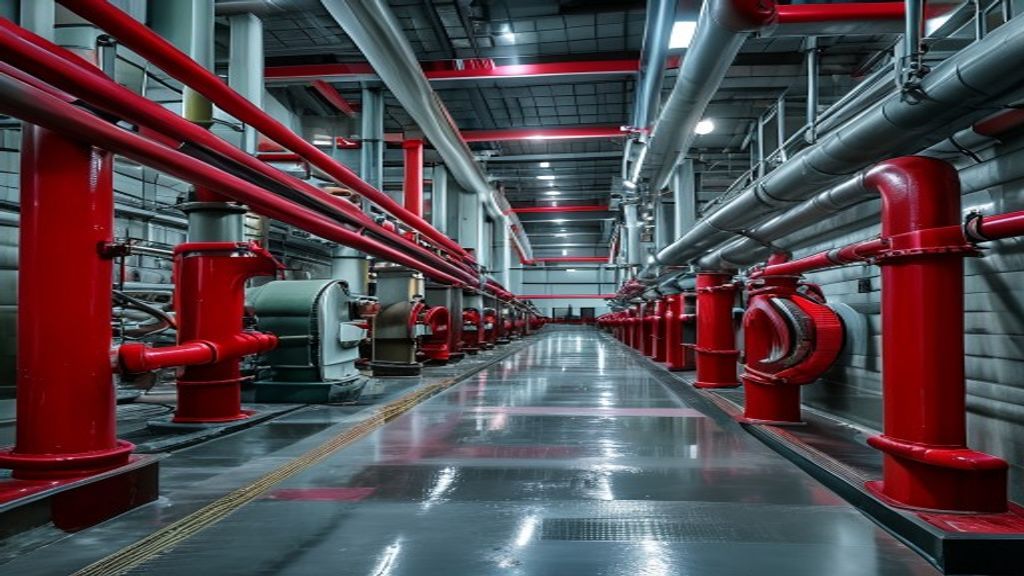
Fire pump rooms are the pulsating heart of any integrated fire suppression system, responsible for providing the necessary pressure and water flow to operate fire sprinklers and hoses efficiently and effectively when needed. In Saudi Arabia, where urban and industrial expansion is experiencing unprecedented growth, there is an increasing focus on applying the highest safety standards to ensure the protection of lives and property. The design and implementation of these rooms demand extreme precision and strict adherence to local and international regulations and standards, foremost among them the Saudi Civil Defense requirements, which are based on the Saudi Building Code for Fire Protection (SBC 801) and the National Fire Protection Association (NFPA) standards.
This comprehensive guide aims to provide in-depth insights for engineers, developers, consultants, and facility owners regarding the fundamental aspects and stringent requirements of the Saudi Civil Defense for the design and implementation of fire pump rooms. By reviewing technical, structural, and operational standards, we seek to highlight the importance of adhering to these requirements to ensure the readiness of fire suppression systems and their ability to respond immediately to any emergency. In this context, Initial Safety emerges as a strategic partner, offering integrated consultations and solutions that ensure full compliance with these standards, thereby enhancing safety and security levels in all types of buildings and facilities.
Regulatory Framework: Saudi Civil Defense and International Standards
The Saudi Civil Defense relies on an integrated set of standards and regulations for defining fire safety requirements, aiming to provide the highest degree of protection. The Saudi Building Code for Fire Protection (SBC 801) serves as the primary reference, encompassing requirements for the design, installation, testing, and maintenance of fire protection systems, including pump rooms. SBC 801 largely draws upon NFPA standards, especially NFPA 20, which pertains to the installation of stationary pumps for fire protection.
Saudi Building Code for Fire Protection (SBC 801):
This code outlines the general and specific requirements for fire extinguishing systems in the Kingdom, covering various aspects from equipment selection to inspection and maintenance procedures.NFPA 20 - Standard for the Installation of Stationary Pumps for Fire Protection:
This international standard is the most detailed technical reference for the requirements of fire pump design, installation, and operation, covering all aspects related to the pump itself, the driver, suction and discharge lines, and control systems.Saudi Civil Defense Regulations:
The General Directorate of Civil Defense in the Kingdom issues supplementary executive regulations and procedures to ensure the application of these codes and standards in line with local conditions and the needs of the Saudi market.
Understanding this complex regulatory framework is the first step towards designing and implementing fire pump rooms that comply with the highest safety standards and ensure obtaining the necessary approvals from official authorities.
Location Selection and Structural Design of Pump Rooms
The location and structural design of the fire pump room are critical factors affecting the system's effectiveness and long-term safety. The location must ensure easy access for maintenance and operation and protect the equipment from external factors and damage.
Location Selection Requirements:
- Easy Access: The room must be easily accessible to personnel and for maintenance, away from obstacles or storage areas.
- Protection from Hazards: It must be located away from ignition sources or hazardous materials that could affect pump safety.
- Protection from Natural Disasters: It must be protected from floods, earthquakes, or other potential natural disasters.
- Proximity to Water Source: It is preferable for the room to be as close as possible to the water tank to minimize the length of the suction line, which reduces pressure loss and increases pump efficiency.
- Ventilation and Lighting: Adequate ventilation must be provided to dissipate heat generated by the drivers, and suitable lighting to facilitate inspection and maintenance operations.
Structural Requirements for the Building:
- Fire Resistance: The walls, floor, and ceiling of the room must be fire-resistant for at least two hours, using approved building materials in accordance with the importance of using fire-resistant building materials in commercial and industrial facilities.
- Sound and Thermal Insulation: Sound insulation is recommended to reduce noise from pump operation, and thermal insulation to maintain an appropriate temperature inside the room.
- Drainage System: An appropriate drainage system must be provided to dispose of any water leaks or pump test water.
- Adequate Space: The room must provide sufficient space around the pumps and equipment for easy installation, maintenance, and inspection. Doors and passageways must allow for easy movement of large equipment.
- Strong Floor: The floor must be strong enough to support the weight of the pumps, drivers, and associated tanks, considering potential vibrations.
To ensure the accurate and professional fulfillment of these requirements, it is advisable to collaborate with experts such as Initial Safety, who possess the necessary expertise in applying local and international standards.
Essential Components of Fire Pump Systems
A fire pump room consists of several key components that work in harmony to ensure optimal performance of the fire suppression system.
Fire Pumps:
- Main Fire Pump: Typically a centrifugal pump powered by an electric or diesel engine. It must be designed to provide the required flow and pressure for the entire system.
- Standby Fire Pump: In many cases, especially in large or critical facilities, Civil Defense requires a standby pump (usually diesel-powered) to ensure system continuity in case of main pump failure or power outage.
- Jockey Pump: A small electric pump whose function is to maintain constant pressure in the piping network, compensate for minor leaks, and thereby prevent unnecessary operation of the main pump.
Drivers:
- Electric Motors: Commonly used, requiring a reliable electrical power source.
- Diesel Engines: Used as a backup or primary power source where reliable electrical power is unavailable. They must be equipped with a fuel tank of sufficient capacity for at least 8 hours of operation.
Controllers:
- Specialized electrical and mechanical control panels for fire pumps, designed to automatically start the pumps when network pressure drops. They must be approved and comply with NFPA 20 standards.
- They must have manual and automatic operation features, and indicators for operation and faults.
Suction and Discharge Piping:
- Suction pipes must be designed to provide smooth water flow to the pump without air vortices.
- Discharge pipes must be capable of withstanding the pressure generated by the pump and directing water to the fire suppression network.
- All pipes and connections must be made of corrosion-resistant, high-quality materials.
Accessories and Valves:
- Isolation Valves: To enable pump maintenance without shutting down the entire system.
- Check Valves: To prevent water backflow to the pump.
- Flow Test Valves: To enable testing of pump performance.
- Pressure Gauges: To monitor pressure in suction and discharge lines.
- Pressure Sensors: To automatically start the pumps.
Electrical and Mechanical Requirements
Electrical and mechanical requirements are the cornerstone of fire pump room design and operation, ensuring reliability and efficiency.
Electrical Requirements:
- Power Source: A reliable and independent electrical power source must be provided for electric pumps. In many cases, Civil Defense requires two independent electrical power sources (main and backup) or a main source with a backup generator.
- Cables and Connections: Cables used must be fire-resistant, withstand high temperatures, and be well-protected from mechanical damage.
- Electrical Control Panels: Must comply with standard specifications and provide protection against overvoltage and overcurrent.
- Backup Generators: If diesel engines are used, ensure sufficient backup generators or batteries are available to power control panels and other accessories.
Mechanical Requirements:
- Pump Foundations: Pumps must be mounted on strong, level concrete foundations to reduce vibrations.
- Expansion Joints: Used to absorb vibrations and thermal expansion in pipes.
- Pressure and Temperature Gauges: Must be installed in clear, easy-to-read locations.
- Cooling Systems for Diesel Engines: An efficient cooling system must be provided for diesel engines to ensure they do not overheat during operation.
- Exhaust System for Diesel Engines: A safe and efficient exhaust system must be designed to discharge combustion gases outside the room.
Control and Monitoring Systems
Control and monitoring systems are essential to ensure the automatic and efficient operation of fire pumps, as well as to provide vital information about the system's status.
Controllers:
- Fire pump control panels must be specifically designed for this purpose and approved by reliable authorities.
- They must include indicators for pressure, electrical currents, operating hours, and operating statuses (manual/automatic, on/off).
- They must be capable of automatically starting the main pump and diesel pump when network pressure drops to a pre-set level.
Alarm and Remote Monitoring Systems:
- Fire pump control systems must be linked to the building's central fire alarm system, so that notifications are sent in case of pump operation, faults, or low fuel levels in the diesel tank.
- In large or critical facilities, a remote monitoring system (SCADA or BMS) is recommended to monitor pump performance from the main control room.
- Temperature sensors must be present in the pump room, as well as water leak detection devices, to ensure early detection of any issues.
Best Practices for Designing and Implementing Pump Rooms
To ensure the highest levels of safety and efficiency in fire pump rooms, the best engineering and operational practices must be followed:
- Early and Comprehensive Planning: Integrate pump rooms into the initial building design, considering all structural, mechanical, and electrical requirements from the outset.
- Selection of Approved Equipment: Use pumps, drivers, and control panels approved by international bodies such as UL or FM, which comply with NFPA 20 standards.
- Flexible Design for Maintenance: Provide sufficient space around all equipment and install isolation valves to enable maintenance of any part of the system without requiring a full system shutdown.
- Attention to Detail: Ensure the quality of welds, proper pipe bracing, and clear placement of measuring devices.
- Testing and Commissioning: Conduct comprehensive system tests after installation to ensure performance according to design specifications and Civil Defense requirements. This includes flow and pressure tests and automatic operation tests.
- Comprehensive Documentation: Keep all engineering drawings, operation and maintenance manuals, test certificates, and inspection reports.
- Continuous Training: Train the operation and maintenance team on how to handle the system and inspect its components.
- Expert Consultation: Leverage the expertise of specialized fire safety companies, such as Initial Safety, to ensure design and implementation compliant with all standards. This is particularly vital in complex projects such as designing integrated fire systems in high-rise buildings.
Common Mistakes and How to Avoid Them
Avoiding common mistakes in the design and implementation of fire pump rooms can save time and reduce potential risks.
Common Mistakes:
- Insufficient Space: Designing a room that is too small, not allowing for easy maintenance or equipment replacement.
- Inappropriate Location: Placing the room in a flood-prone area, too far from the water source, or difficult to access.
- Non-compliance with Fire Resistance Standards: Not using fire-resistant materials for the room's walls and ceiling, endangering the pumps in case of a nearby fire.
- Errors in Suction Line Design: Designing a suction line that is too long or contains too many bends, causing significant pressure loss or air vortex formation.
- Lack of Backup Power Source: Relying on a single electrical power source, which risks system shutdown during a power outage.
- Inadequate Ventilation: Failing to provide proper ventilation to dissipate heat, leading to overheating and shutdown of drivers.
- Neglecting Periodic Maintenance: Not conducting regular inspections and tests, which can lead to undetected faults.
- Failure to Document Changes: Not updating engineering drawings and documentation after any modifications to the system.
How to Avoid Them:
- Conduct a comprehensive feasibility study and architectural and engineering design before commencing implementation.
- Strictly adhere to SBC 801 and NFPA 20 standards.
- Collaborate with specialized engineers and consultants in fire protection systems.
- Conduct rigorous tests after installation and before handover.
- Establish and regularly implement a comprehensive preventive maintenance plan.
Maintenance and Periodic Inspection: Ensuring Readiness
Installing a high-quality fire pump system is not sufficient on its own to ensure safety; it must be followed by a strict periodic maintenance and inspection program to guarantee the system's readiness to operate at any time.
Weekly Inspection:
- Check fuel level in the diesel tank.
- Check oil and coolant levels for diesel engines.
- Ensure all valves are in their correct positions (open/closed as per design).
- Check system pressure and ensure the jockey pump is operating correctly.
- Manually run the main pump and diesel pump for a short period.
Monthly Inspection:
- Perform a Flow Test for the pumps to confirm their ability to provide the required flow and pressure.
- Check batteries and their chargers for diesel engines.
- Clean the room and ensure it is free of obstructions.
Annual Inspection:
- Calibrate measuring devices (pressure gauges, pressure sensors).
- Comprehensive inspection of all electrical and mechanical components.
- Change oils and filters for diesel engines.
- Thorough review of the maintenance report and documentation of all inspections and repairs.
To ensure the continuous efficient operation of these systems, Initial Safety offers specialized periodic maintenance and inspection services that comply with Civil Defense requirements and NFPA standards, ensuring maximum reliability.
Case Studies and Applications in the Saudi Market
Numerous leading projects in Saudi Arabia demonstrate strict adherence to Civil Defense standards in the design and implementation of fire pump rooms.
- Major Commercial Complexes: In Riyadh and Jeddah, large commercial complexes like Riyadh Park or Red Sea Mall require advanced fire suppression systems, where pump rooms are designed to meet enormous flow and pressure demands, with main and diesel-powered standby pumps to ensure service continuity.
- Industrial and Petrochemical Facilities: In industrial cities such as Jubail and Yanbu, even stricter requirements are applied. Pump rooms there include advanced monitoring and control systems, and standby pumps often have very high capacities to ensure protection in highly hazardous environments. Designing and implementing advanced fire suppression systems in oil and petrochemical facilities requires specialized expertise.
- High-Rise Buildings: In modern residential and commercial towers, pump rooms are designed to be an integral part of the integrated protection system, considering the challenges of height and pressure distribution across different floors.
These examples confirm that compliance with standards is not merely a routine procedure but an essential necessity to ensure facility safety and business continuity.
Conclusion: Towards a Safe and Protected Environment
The design, implementation, and maintenance of fire pump rooms in accordance with Saudi Civil Defense requirements and NFPA standards is not just about regulatory compliance; it is a vital investment in the safety of lives and property. It is a fundamental element that ensures the effectiveness and readiness of fire suppression systems to operate at critical moments. Adherence to structural, technical, and operational standards, in addition to periodic maintenance programs, guarantees the reliability of these systems and increases the resilience of facilities in facing any emergency.
We urge all stakeholders in the design, engineering, facility management, and real estate development sectors in Saudi Arabia to adopt these practices and standards to ensure safe and protected living and working environments. By adhering to standards and collaborating with specialized entities like Initial Safety, we can build a safer future for our projects and facilities.
Frequently Asked Questions (FAQ)
What is the importance of the jockey pump in a fire suppression system?
The jockey pump is a small pump whose main task is to maintain constant pressure in the fire suppression piping network. It compensates for minor leaks in the network and prevents unnecessary operation of the main pumps, thereby reducing energy consumption and extending the lifespan of the main pumps.
What are the basic requirements for fire pump room ventilation?
Adequate ventilation must be provided to dissipate heat generated by the drivers, especially diesel engines. Civil Defense and NFPA require a mechanical ventilation system capable of refreshing the air in the room to ensure that the temperature does not exceed the safe operating limits for the equipment.
How many electrical power sources are required for fire pumps?
According to NFPA 20 and SBC 801, a reliable electrical power source must be provided for electric pumps. In many cases, especially in critical facilities, two independent electrical power sources or a main source and a backup generator are required to ensure continuous operation.
What is the required fire resistance rating for fire pump room walls?
The walls, ceiling, and floor of a fire pump room must be fire-resistant for at least two hours (120 minutes) to protect critical equipment from external fire and ensure its continued operation.
Is it allowed to store other materials in the fire pump room?
No, it is strictly forbidden to store any materials unrelated to the operation and maintenance of fire pump systems inside the room. The room must remain clean and free of obstructions to ensure easy access, maintenance, and reduce fire risks.
What is the importance of a Flow Test for fire pumps?
A flow test is essential to verify that the pump is capable of providing the required flow and pressure according to the system's design specifications. It is performed periodically (usually monthly or annually) to ensure optimal pump performance and readiness in emergencies.
What is the difference between SBC 801 and NFPA 20?
SBC 801 is the Saudi Building Code for Fire Protection, which is the local standard defining fire safety requirements in Saudi Arabia. SBC 801 largely relies on NFPA standards, including NFPA 20, which is the international standard for the installation of stationary pumps for fire protection. SBC 801 provides general guidance, while NFPA 20 offers precise technical details for pump design and installation.
Official References
- Saudi Civil Defense General Directorate: Technical Regulations and Requirements for Fire Protection Systems.
- Saudi Building Code for Fire Protection (SBC 801): Issued by the Saudi Standards, Metrology and Quality Organization (SASO).
- NFPA 20 - Standard for the Installation of Stationary Pumps for Fire Protection: National Fire Protection Association.
- NFPA 13 - Standard for the Installation of Sprinkler Systems: National Fire Protection Association.