Fire Extinguishing Steps in High-Rise Buildings: An Advanced Guide According to NFPA 101
Introduction: Unique Challenges and Integrated Solutions
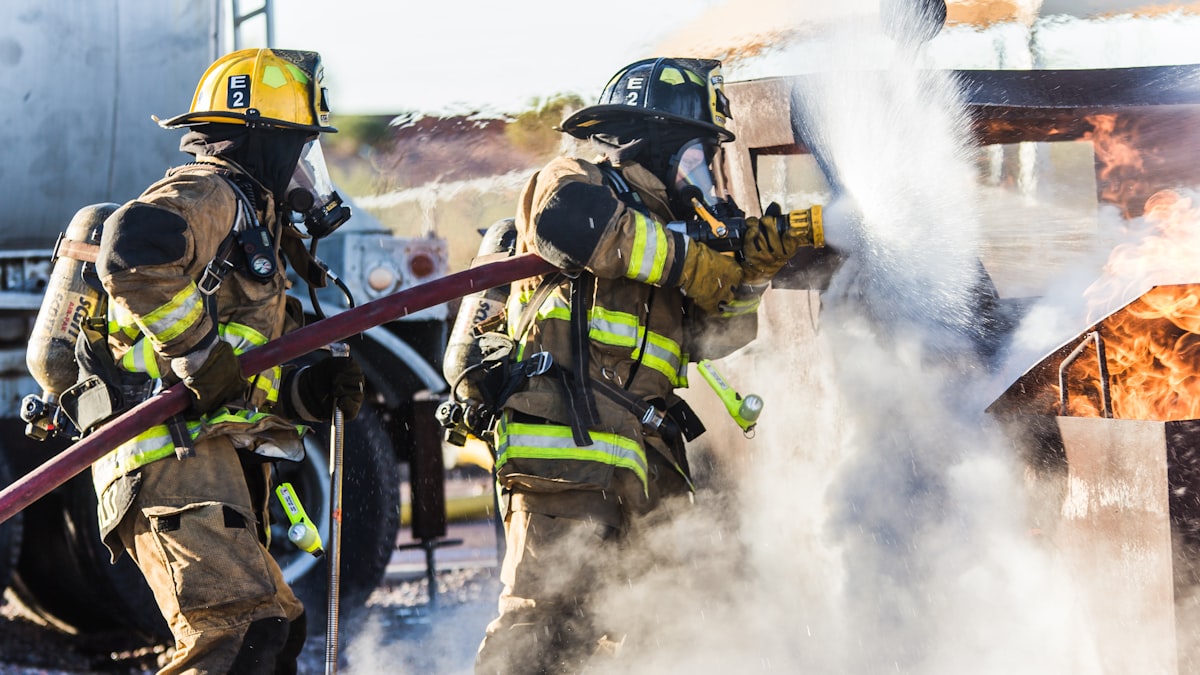
High-rise buildings, rapidly increasing in number in modern cities like Riyadh and Jeddah in Saudi Arabia, symbolize urban progress and economic prosperity. However, these complex structures present unique and intricate challenges concerning fire safety. Rapid fire spread, difficulties in vertical evacuation operations, and challenges for fire crews and equipment to access upper floors all make fire extinguishing strategies in high-rise buildings critically important. Designing and implementing robust fire safety protocols is no longer a luxury but an absolute necessity to protect lives and property.
In this context, NFPA 101, known as the Life Safety Code, emerges as an indispensable global reference for establishing these strategies. It provides a comprehensive framework for fire prevention and ensuring the safety of building occupants. Experts at Initial Safety emphasize that a holistic approach integrating prevention, detection, suppression, and evacuation is key to ensuring maximum security. This advanced guide aims to explore the essential steps and sophisticated systems required for effective fire extinguishing in high-rise buildings, focusing on specific requirements and standards that ensure compliance with the best international and local practices in Saudi Arabia.
Understanding NFPA 101 and its Application in Saudi Arabia
NFPA 101 is not merely a building code but a life safety code primarily focused on protecting building occupants from fires and other emergencies. This standard covers a wide range of aspects, including requirements for means of egress (exits), fire protection systems, and building features that contribute to overall safety. The main objective is to provide the highest possible protection for people within the building, whether by preventing fire or by providing safe means of escape in the event of one.
In Saudi Arabia, the Civil Defense plays a pivotal role in adopting and adapting international fire safety standards. The Saudi Civil Defense often adopts or modifies NFPA standards to suit local conditions and needs, making compliance with these standards a paramount necessity for all developers and building managers. For instance, the Saudi Building Code (SBC 801) for Fire Protection frequently references NFPA standards, ensuring the application of a high level of fire safety in all facilities, especially high-rise buildings experiencing significant growth in major cities.
Pillars of Advanced Fire Suppression in High-Rise Structures
Fire extinguishing strategies in high-rise buildings rely on an integrated system of advanced technologies, working together to ensure rapid response and effective suppression:
- Automatic Sprinkler Systems: These systems are the backbone of any advanced fire extinguishing strategy in high-rise buildings. They include various types such as wet pipe, dry pipe, pre-action, and deluge systems. These systems are designed to provide adequate coverage and specific spray density, considering high-rise specific requirements related to water pressure and flow to ensure delivery to upper floors. They are critical for immediate fire control and limiting its spread, giving occupants valuable time for evacuation and fire crews an opportunity to arrive.
- Standpipe and Hose Systems: These systems are essential for firefighters, providing an immediate source of pressurized water on each floor. They are classified into Class I (for fire department use only), Class II (for occupant use, rare in high-rise buildings), and Class III (for both uses). Hose connections must be available in strategic locations and meet specific pressure requirements. Initial Safety, drawing on its experience in the Saudi market, recommends rigorous testing and maintenance of standpipe systems, as their reliability is paramount during an emergency and ensures the Civil Defense teams' ability to effectively combat fires.
- Fire Pumps and Water Supply: To ensure the effective operation of sprinkler and standpipe systems, adequate water supply and constant pressure must be provided. This is achieved through main fire pumps, jockey pumps (which maintain pressure), and backup pumps (diesel or electric) to ensure redundancy and reliability. High-rise buildings must have sufficient water tanks to meet fire extinguishing demands for a specified period, and these pumps are often a critical point of failure if not regularly maintained.
- Special Hazard Systems: For areas containing sensitive equipment or rapidly flammable materials, specialized extinguishing systems are used. These include clean agent systems (such as FM-200 and Novec 1230) for data centers, control rooms, and archives, which leave no residue and are safe for equipment. Foam systems may also be used for specific industrial applications within a high-rise building, such as helipads or fuel storage areas, while CO2 systems are less common in occupied spaces due to the risk of asphyxiation.
Integrated Fire Detection and Alarm Systems
Early detection and alarm systems are the cornerstone of any effective fire safety strategy, especially in high-rise buildings where any delay in detection can lead to severe consequences. These systems rely on advanced technologies to ensure maximum vigilance:
- Smoke and Heat Detectors: Modern systems use addressable detectors, allowing for precise location of the fire. Smoke detector types include photoelectric and ionization, in addition to aspirating smoke detection (VESDA) systems that provide very early warning in critical areas such as server rooms. Heat detectors come in types such as fixed temperature and rate-of-rise detectors.
- Manual Call Points (MCPs): These points are strategically placed throughout the building to enable occupants to manually activate the alarm as soon as they detect a fire.
- Fire Alarm Control Panel (FACP): This panel is the central brain of the alarm system. It monitors all inputs from detectors and call points, initiates audible and visual alarms, controls suppression systems, and activates other safety protocols such as HVAC shutdown and elevator recall.
- Voice Evacuation Systems: In high-rise buildings, voice evacuation systems are essential for clearly guiding occupants during phased evacuation. These systems are integrated with the FACP and provide pre-recorded messages or live announcements.
- Central Monitoring: Connecting the fire alarm system to the Civil Defense to ensure a rapid and effective response.
The Initial Safety team often observes that inadequate integration between different sub-systems (e.g., HVAC shutdown, elevator recall) is a common oversight during installation, hindering overall system effectiveness and reducing its ability to respond quickly and systematically.
Effective Evacuation Strategies and Means of Egress
In high-rise buildings, evacuation is as crucial as suppression. Evacuation strategies aim to provide safe and organized paths for building occupants to reach safety:
- Phased Evacuation: Instead of evacuating the entire building at once, floors near the fire are evacuated first (the fire floor and floors immediately above and below it), then the rest of the building is evacuated gradually. This prevents congestion and maintains an organized flow.
- Pressurized Stairwells: Emergency stairwells are designed to be pressurized with air to prevent smoke ingress, maintaining a safe and clear escape route for occupants and firefighters.
- Emergency Lighting and Exit Signage: Evacuation routes must be well-lit with clear, illuminated exit signs, even in the event of a power outage. These systems are equipped with backup batteries to ensure extended operation.
- Refuge Areas: These are safe and protected areas within the building, designed to provide temporary shelter for occupants with special needs or those unable to fully evacuate the building immediately.
- Emergency Elevators: Specific elevators are specially designed for firefighter use during emergencies, equipped with dedicated power supplies and control systems to ensure their operation even in fire conditions.
- NFPA 101 Requirements: The standard details precise requirements for exit widths, travel distances to exits, and door swing directions to ensure easy and rapid evacuation.
Operational Readiness, Training, and Civil Defense Coordination
Even with the most advanced systems, the human element remains critical to effective fire response. Therefore, operational readiness, extensive training, and effective coordination with Civil Defense are indispensable:
- Occupant Training: Regular fire drills and awareness campaigns must be conducted for all building occupants, focusing on evacuation routes, assembly points, and how to use a portable fire extinguisher. The goal is to raise awareness and individual readiness.
- Building Emergency Response Team (BERT): A specialized internal team must be trained to assist occupants, guide evacuations, and effectively coordinate with firefighters upon their arrival.
- Coordination with Civil Defense: This includes pre-incident planning, sharing building layouts, access points, and safety system details. Regular joint drills should be conducted to ensure seamless and effective coordination during real incidents. Initial Safety engineers adopt a continuous training program methodology, emphasizing that even the most advanced systems are only as effective as the people operating and responding to them.
Maintenance, Inspection, and Compliance: Key to Reliability
It is not enough to install advanced fire safety systems; they must be maintained in excellent working condition to ensure their reliability when needed. This requires a comprehensive program of maintenance, inspection, and compliance:
- Preventative Maintenance: Regular checks, testing, and servicing of all fire safety systems, including sprinklers, fire pumps, alarm systems, detectors, emergency lighting, and fire-rated doors.
- Testing Protocols: Periodic tests (weekly, monthly, quarterly, and annually) must be conducted according to NFPA standards, such as NFPA 25, which is the standard for the inspection, testing, and maintenance of water-based fire protection systems. These tests ensure that all components are functioning correctly.
- Record Keeping: Meticulous documentation of all inspections, tests, and repairs performed on the systems must be maintained. These records are vital for demonstrating compliance and identifying any recurring issues.
- Compliance Audits: Regular audits by third-party experts or Civil Defense representatives to ensure ongoing adherence to NFPA 101 and local regulations. This ongoing commitment is where Initial Safety's methodologies shine, ensuring systems remain fully operational and compliant with the highest safety standards.
Challenges and Future Outlook in Fire Safety
As high-rise buildings continue to evolve in complexity and height, new challenges emerge that require innovative solutions. This includes integrating smart building technologies (such as IoT and AI) into fire safety systems, using sustainable building materials that may react differently to fire, and the continuous need for research and development in fire science. It also requires adaptable regulatory frameworks to keep pace with these changes.
Conclusion: A Continuous Commitment to Safety
Fire safety in high-rise buildings is a multifaceted discipline that demands continuous vigilance, cutting-edge technology, and strict adherence to international and local standards like NFPA 101. It is a collective responsibility shared by developers, building managers, engineers, and all building occupants. By implementing this advanced guide, Saudi Arabia can ensure that its high-rise buildings are not only symbols of modernity but also safe havens for everyone.
For expert technical consultation or Civil Defense-approved installation and maintenance services, contact Initial Safety via initialsafety.sa.
References
- NFPA 101: Life Safety Code, National Fire Protection Association.
- NFPA 25: Standard for the Inspection, Testing, and Maintenance of Water-Based Fire Protection Systems.
- Saudi Building Code (SBC 801): Fire Protection.
- General Directorate of Civil Defense, Kingdom of Saudi Arabia – Regulations and Requirements.