Guide to Fire Suppression Piping Installation According to NFPA 13
Introduction: The Importance of Professional Fire Suppression System Installation
Fire suppression systems are an integral part of the infrastructure of any modern building, whether commercial, industrial, or residential. They serve as the first line of defense against fires, playing a critical role in protecting lives and property. To ensure the effectiveness of these systems, they must be designed, installed, and maintained with utmost precision, adhering to the highest international standards. In Saudi Arabia, compliance with these standards gains particular importance due to significant urban and industrial expansion. Experts at Initial Safety emphasize that NFPA 13 (National Fire Protection Association) is the primary reference for the installation of sprinkler systems, and understanding and correctly applying this standard is crucial for anyone working in fire safety.
This comprehensive guide will delve into the details of fire suppression piping installation, focusing on the essential requirements of NFPA 13, best practices, and the role of regulatory bodies such as the Saudi Civil Defense. The aim is to provide a valuable resource for engineers, technicians, and contractors to ensure the installation of efficient and reliable systems.
Understanding NFPA 13 and its Importance in Fire Safety
NFPA 13, or the 'Standard for the Installation of Sprinkler Systems,' is one of the most vital documents issued by the National Fire Protection Association. This standard sets the minimum requirements for the design and installation of automatic sprinkler systems, which are considered the most effective in controlling and extinguishing fires in their early stages. The standard is regularly updated to reflect the latest technologies and research in fire suppression.
- Primary Objective: The main goal of NFPA 13 is to provide a high level of fire protection by ensuring that sprinkler systems operate efficiently when needed.
- Scope: The standard covers multiple aspects, including hazard classification, water supply requirements, sprinkler selection, hydraulic network design, material selection, and installation methods.
- Importance in Saudi Arabia: Local Saudi Civil Defense regulations heavily rely on NFPA standards, including NFPA 13, as a primary reference for the design and installation of fire suppression systems. Adhering to these standards is not only a legal requirement but also a necessity to ensure the safety of buildings and their occupants.
Key Components of a Sprinkler System
A fire sprinkler system consists of several elements that work together to provide an effective response to a fire. Understanding these components is essential for proper installation:
- Piping: The backbone of the system, transporting water from its source to the sprinklers. It must be made of heat and pressure-resistant materials such as black steel, galvanized steel, stainless steel, or CPVC for specific applications.
- Sprinklers: Devices that sense heat and automatically discharge water. Types vary based on activation temperature, spray pattern, and application (e.g., pendent, upright, sidewall sprinklers).
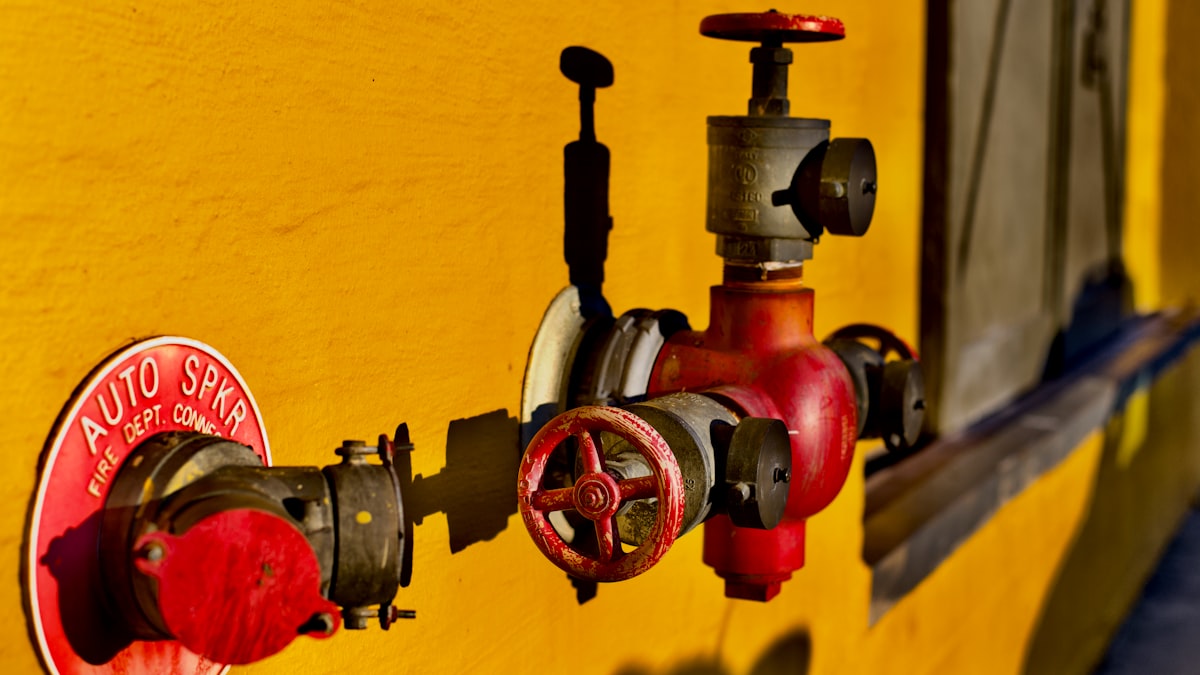
- Control Valves: Allow for isolating parts of the system for maintenance or testing without shutting down the entire system.
- Alarm Device: Activates upon water flow in the system to indicate a fire. This can be a mechanical bell or an electrical signal connected to the central fire alarm system.
- Water Supply: Must provide sufficient pressure and flow to operate the system. This could be the municipal water network or a dedicated fire tank with a fire pump.
- Fire Pump: Used to boost water pressure in the system to ensure it reaches all sprinklers at the required pressure, especially in high-rise buildings or large systems.
Stages of Fire Suppression Piping Installation
Installing fire suppression system piping requires meticulous planning and systematic execution to ensure compliance with NFPA 13:
- Design and Planning:
- Every project begins with a precise hydraulic design that determines pipe sizes, sprinkler locations, and network routing based on hazard classification (light, ordinary, extra hazard) and water supply requirements.
- The design must be performed by a certified engineer with expertise in fire suppression systems.
- Material Selection:
- The type and size of pipes, sprinklers, valves, and fittings are chosen based on design specifications and NFPA 13 standards, considering operating conditions and the surrounding environment.
- Cutting, Fabrication, and Joining:
- Pipes are cut, shaped, and prepared for installation either on-site or in a specialized workshop.
- Joining methods vary by pipe type and include welding, threaded connections, or grooved couplings. All connections must be made according to industry standards and NFPA 13 to ensure no leaks and pressure resistance.
- Hanging and Bracing:
- Pipes are hung using hangers and supports specifically designed to support the weight of the pipes and the water within them, as well as to withstand any additional forces. Initial Safety, drawing on its experience in the Saudi market, recommends strict adherence to the hanging distances specified in NFPA 13 to prevent sagging or collapse.
- Seismic bracing must be provided in earthquake-prone areas according to local requirements and NFPA 13.
- Installation of Sprinklers, Valves, and Other Devices:
- Sprinklers are installed in the locations specified in the design, observing correct distances from walls and obstructions.
- Control valves, alarm devices, pressure gauges, and the fire pump (if applicable) are installed according to drawings and specifications.
- Testing and Flushing:
- Upon completion of installation, a hydrostatic test is conducted to ensure the system is free of leaks.
- The system is flushed to remove any impurities or debris that could obstruct water flow or clog sprinklers.
- Documentation and Approval:
- Comprehensive documentation, including as-built drawings, test certificates, and a list of components, must be prepared.
- These documents are submitted to regulatory bodies, such as the Civil Defense, for review, final inspection, and obtaining the approval certificate.
Critical Considerations During Installation to Avoid Common Mistakes
The process of installing fire suppression piping is complex and requires attention to detail. Common mistakes can lead to system failure when it is needed most:
- Coordination with Other Trades: Early coordination with mechanical, electrical, and architectural trades is essential to ensure that pipe routes do not conflict with other systems such as HVAC ducts or electrical cables.
- Clearances and Obstructions: Adherence to minimum clearances specified in NFPA 13 between sprinklers and walls, obstructions, and structures. The Initial Safety team has observed that failure to maintain these clearances can affect water spray patterns and reduce system effectiveness.
- Corrosion Protection: In environments where corrosion may occur (such as humid or industrial areas), additional measures must be taken, such as using galvanized or coated pipes, or cathodic protection systems.
- Proper Support: Ensuring that all pipes are adequately supported to prevent sagging and excessive loading on connections, especially in long runs or large diameters.
- Continuous Inspection: Conducting continuous visual inspections during installation to detect and correct errors early.
Role of Civil Defense and Local Requirements in Saudi Arabia
In the Kingdom of Saudi Arabia, the Civil Defense plays a pivotal role in overseeing the installation of fire suppression systems. Their role includes:
- Design Review: All fire suppression system designs and engineering drawings must be submitted to the Civil Defense for review and approval before installation work begins.
- Field Inspection: Civil Defense inspectors conduct site visits to verify that installation is carried out according to approved designs, NFPA standards, and local regulations.
- System Certification: After installation is complete and all tests are passed, the Civil Defense issues a system certification, which is necessary for obtaining the building's occupancy permit.
- Compliance with Additional Requirements: The Civil Defense may impose additional requirements beyond NFPA 13 in some cases, based on the building type or hazard level, and these must be adhered to.
Best Practices for Quality and Safety Assurance
To ensure the highest levels of quality and safety in fire suppression system installation, the following best practices are recommended:
- Qualified Workforce: Installation must be performed by experienced and certified technicians and engineers who have a deep understanding of NFPA 13 and NFPA 25 (for inspection, testing, and maintenance of sprinkler systems). Initial Safety engineers adopt a continuous training methodology to ensure their team keeps abreast of the latest developments and standards.
- Use of Approved Materials: Ensure that all components used (pipes, sprinklers, valves, pumps) are approved by reputable bodies such as UL or FM Global and comply with NFPA 13 specifications.
- Verification of Drawings: Compare shop drawings with architectural and structural drawings before commencing work to avoid conflicts.
- Accurate Documentation: Maintain detailed records of all installation phases, including material certificates, test reports, and any modifications made to the original design.
- Operation and Maintenance Training: Provide adequate training to building staff on basic system operation and maintenance, and understanding alarm indicators.
- Regular Maintenance: Establish a regular maintenance plan according to NFPA 25 to ensure the system remains in constant readiness.
References
- NFPA 13: Standard for the Installation of Sprinkler Systems
- NFPA 25: Standard for the Inspection, Testing, and Maintenance of Water-Based Fire Protection Systems
- Saudi Building Code (SBC) - Fire Protection (SBC 801)
- General Directorate of Civil Defense Regulations, Kingdom of Saudi Arabia
Conclusion
Installing fire suppression system piping according to NFPA 13 is not merely a technical procedure; it is a moral and legal commitment that ensures the safety of individuals and properties. Adherence to international and local standards, the use of high-quality materials, and the employment of qualified workforces are the fundamental pillars of an effective and reliable fire suppression system. Ultimately, investing in professional fire suppression systems is an investment in long-term security and safety. For technical consultation or Civil Defense-approved installation and maintenance services, contact Initial Safety via initialsafety.sa.